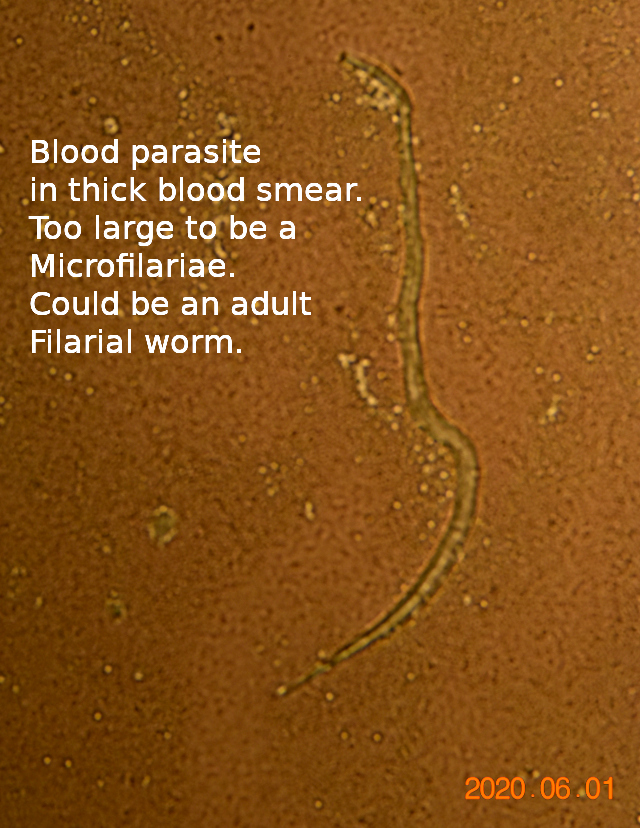
The Filarial Worms, also known as Filariae or tissue
Nematodes (of the Filarioidea superfamily) seems to
be another of those pathogens that some laboratories, in Florida,
are not capable or willing to find in blood or sputum
samples. But I have found them in my blood and in my sputum.
Therefore I know that it is possible to find in an unfixed and
unstained blood or sputum microscope slide. However, it's
not easy. The blood sample must be fresh, with no chemicals added
to it, unfixed and unstained. The sputum must also be unstained
and with no chemicals added to it.
The vectors (carriers or intermediate hosts) of these
microscopic nematodes are blood sucking arthropods, usually
mosquitoes.
These are the scientific names (& common names in
parenthesis) of the Microfilariaes that can infect humans:
Wuchereria Bancrofti (Bancroft's filaria), Loa Loa
(eye worm), Brugia malayi (malayan filaria), Mansonella
persans, Mansonella streptocerca, and Onchocerca
volvulus (blinding filaria).
In Central America & Africa, the black fly (Simulium)
is known to carry Onchocerca volvulus.
The Anopheles & Mansonia mosquitoes are
known to carry Brugia malayi.
The Culex, Aedes, and Anopheles mosquitoes are
known to carry Wuchereria Bancrofti.
Doxycycline can kill most of the
microfilariaes, but can not kill the adult Filariaes.
In fact, no known medicine can kill the adult Filariaes that can
hide in the lymphatic system or in the capilaries of the lungs
and/or the capilaries of the heart.
Adult females can produce thousands of microfilariaes every day.
Ivermectin kills the microfilariaes and prevents new
microfilariaes from leaving the uteri of the adult females.
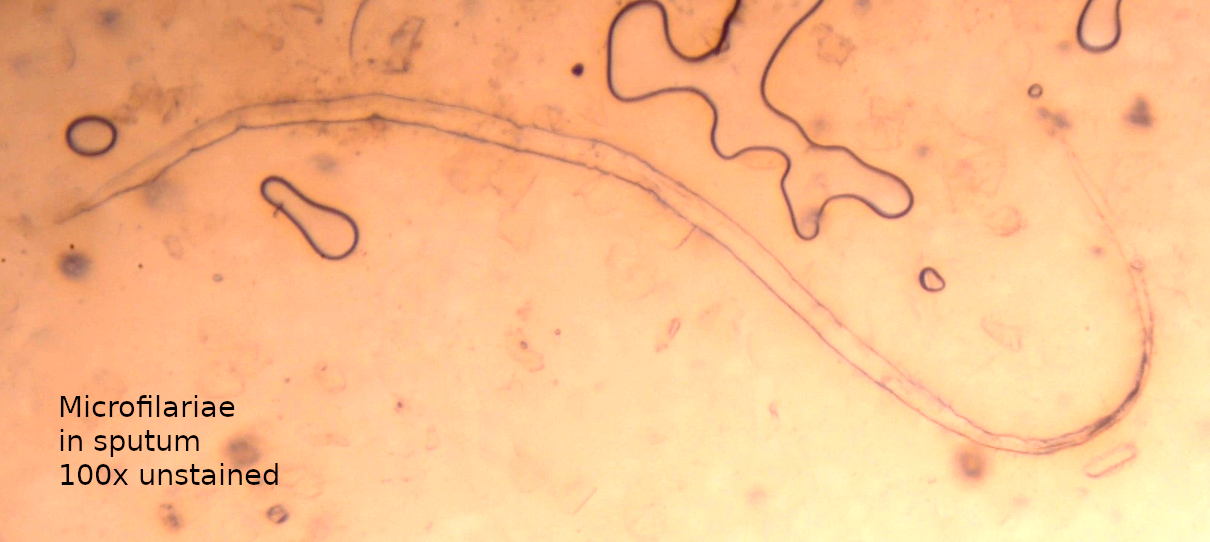
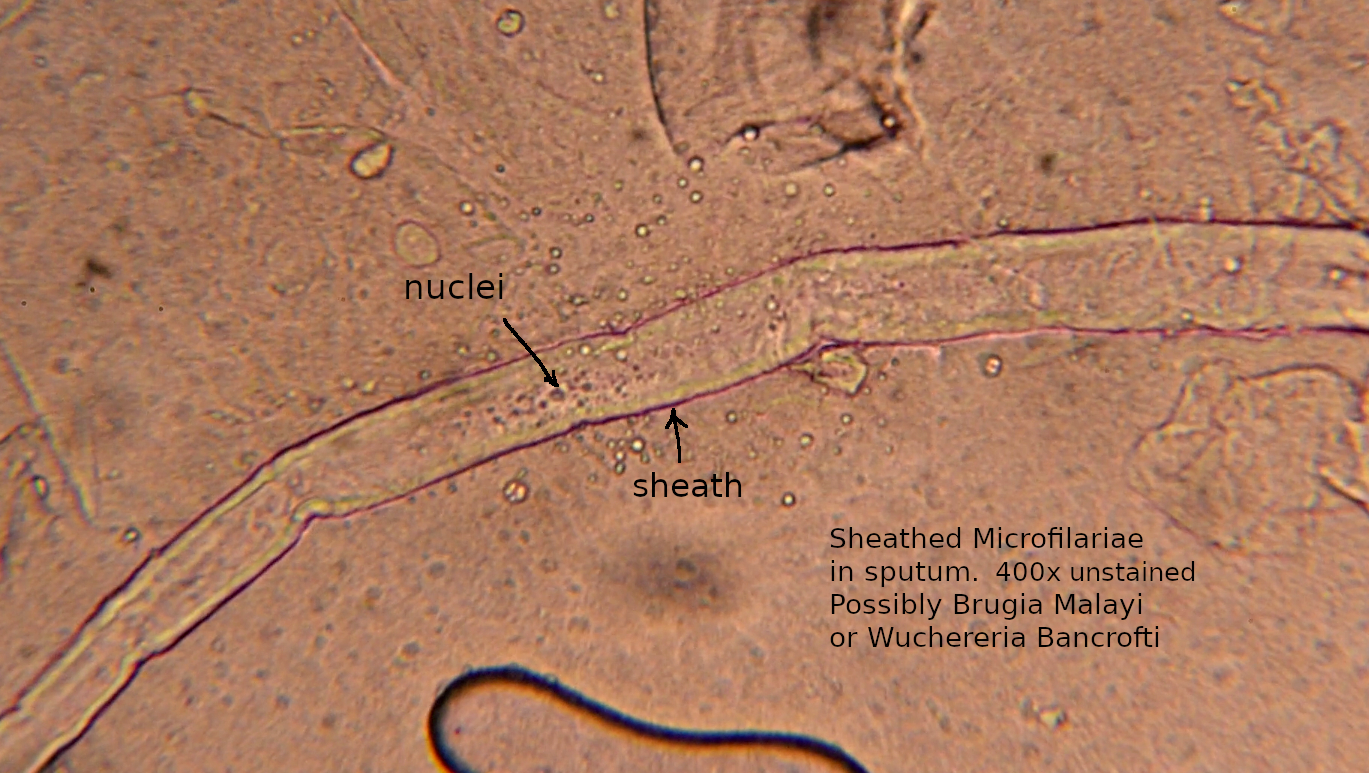
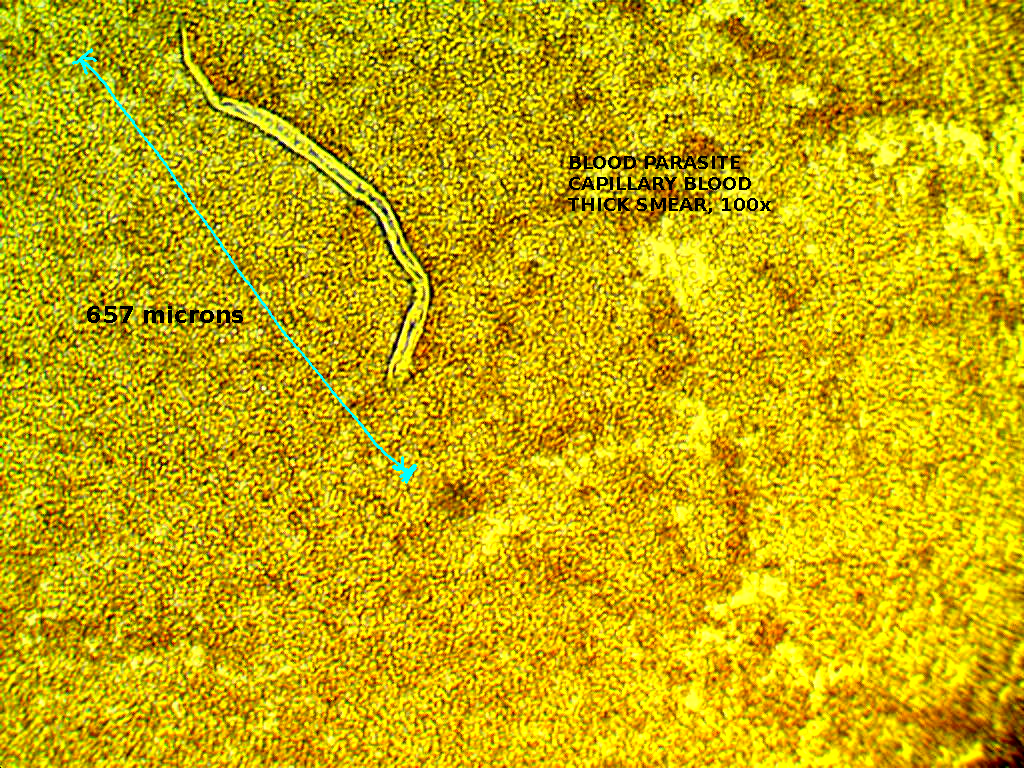
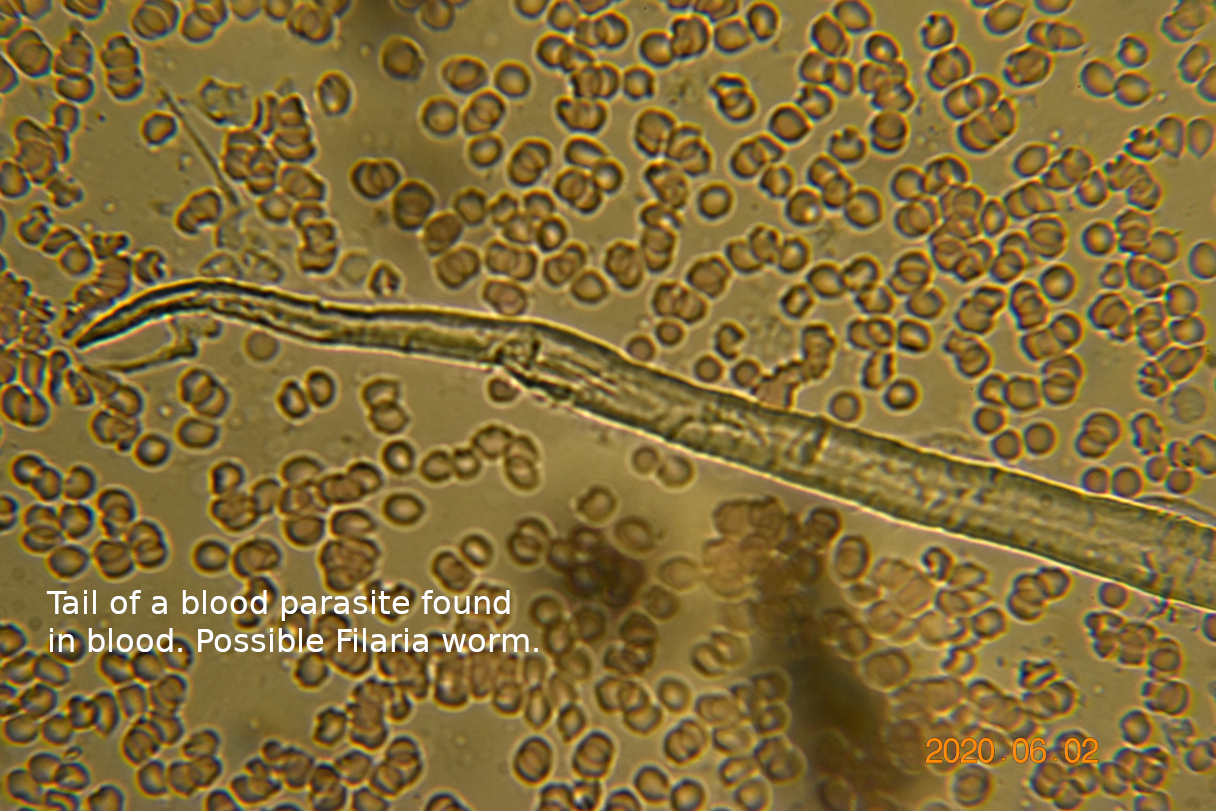
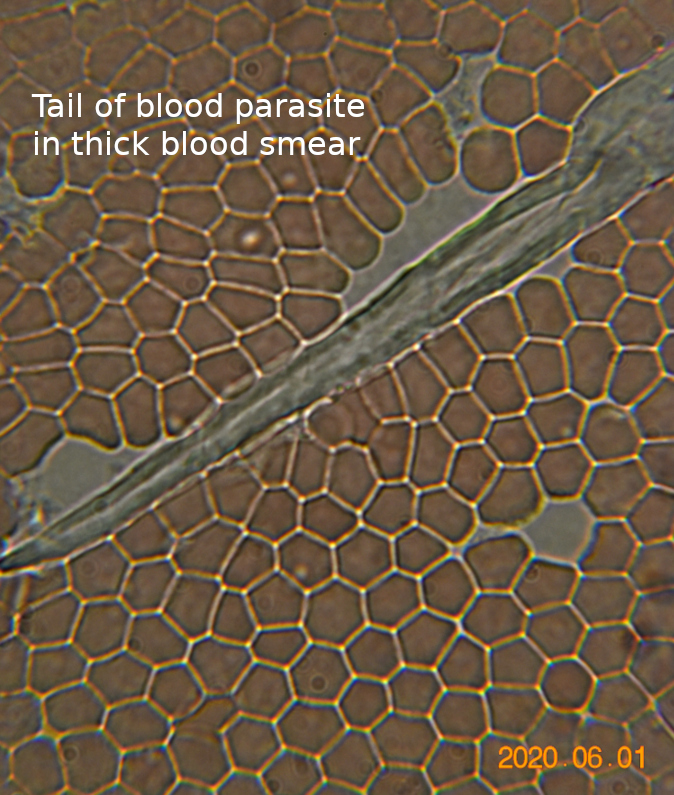
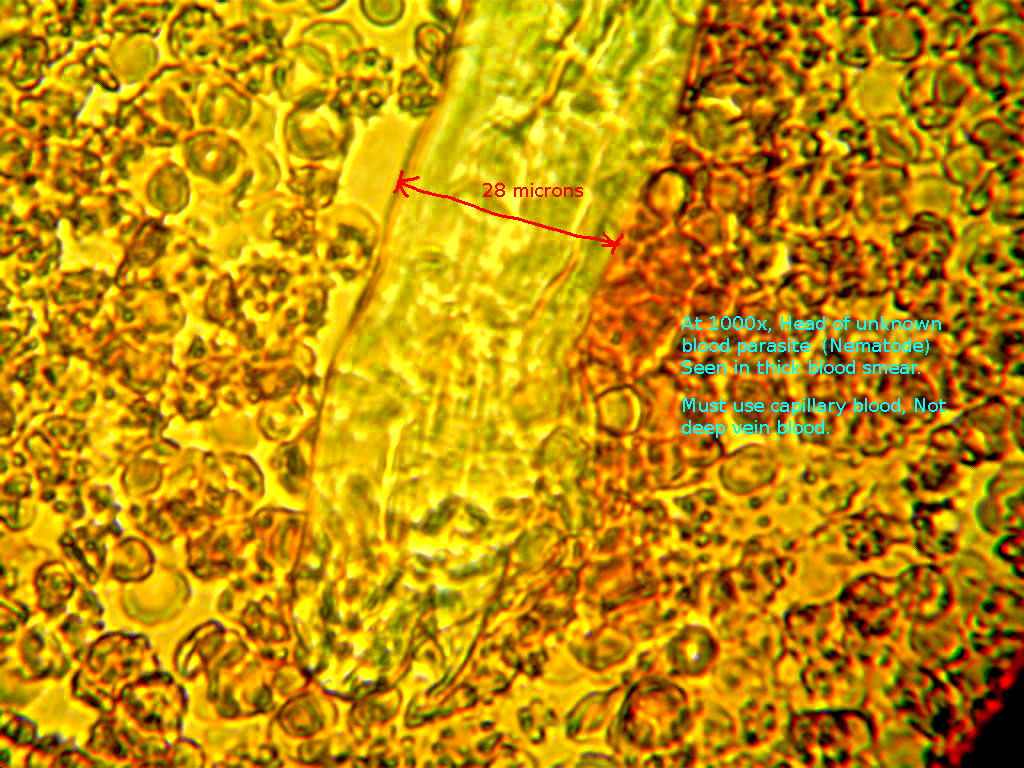
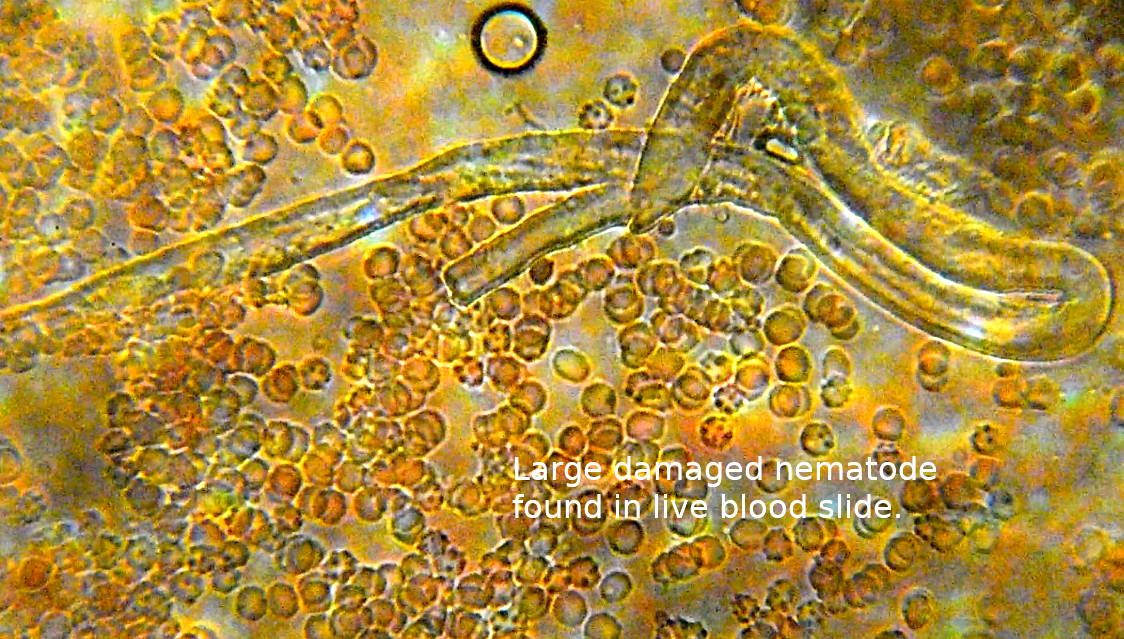
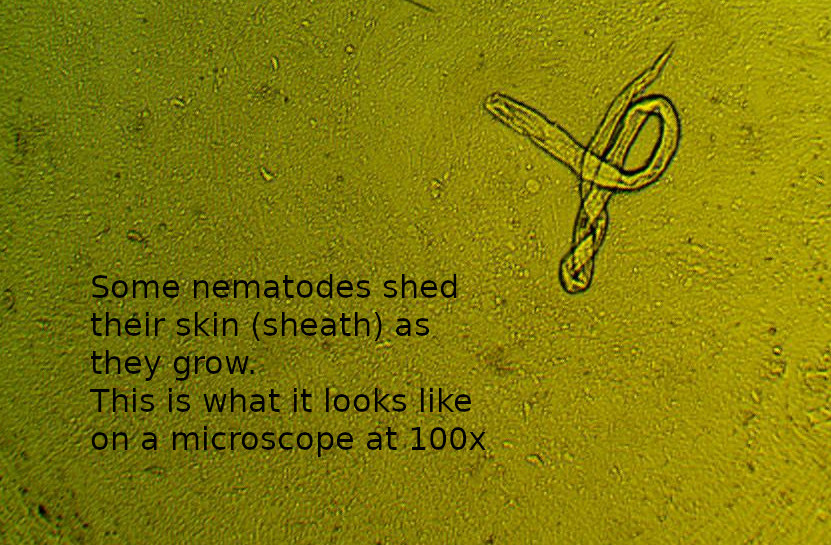
I am showing, in this page, links to some micrographs and
microvideos that shows some of the Microfilariaes (or some
other similar microscopic nematode) that I have found in
microscope slides made with my blood or my sputum in them.
However, I have not been able to identify the species of the ones
in my lungs and blood.
The following small images are links to the larger micrographs, if
you select them (by pressing the select button on your mouse or
track ball, or if using a touch screen, touch them) it will show
you the larger micrographs.
FROM SPUTUM:


And here is a 1 minute microvideo at 400x of the microfilariae
in sputum.

FROM BLOOD:


I have seem this microscopic nematodes, in the blood, as far
back as 2020.
However, I first saw them, in sputum in 2026, while looking for
mold and bacteria due to an acute pulmonary infection.
REFERENCES:
Paniker's Textbook
of MEDICAL PARASITOLOGY (8th Edition)
MEDICAL PARASITOLOGY A Self-Instructional Text (7th Edition)
CLINICAL MICROBIOLOGY Made Ridiculously Simple. (6th
Edition)
RETURN