I have noticed that some doctors and physician
assistants do not know that white sputum (not clear, but pure
white thick sticky sputum) indicates a fungal infection in the
lungs and/or the bronchus and/or the trachea. Specially in
individuals who are coughing several times per hour, are feeling
chest pain, fatigue, and have being diagnosed with lung problems
such as bronchiecstasis and/or pulmonary fibrosis.
And I have also noticed that some laboratories are incapable
or unwilling to detect these type of pulmonary fungal
infections. Either they are using the wrong type of agar plates,
or they are not waiting the necessary 3 days (minimum for a good
culture result). When doing a sputum culture, they are probably
using blood agar plates. That is OK if they are looking for
bacteria, but if they are looking for molds (fungus) they should
use potato dextrose or malt extract plates, then they have to keep
them at the proper temperature range, in the dark, for a minimum
of 3 days, in order to create fungal colonies.
The data in this portal will eventually be moved to the "Heath
Matters" or the "Microscopy" portal. However I feel that it is
sufficiently important to have its own portal for now.
Here are 3 photos of 3 different sputum cultures done in May and
June of 2026.


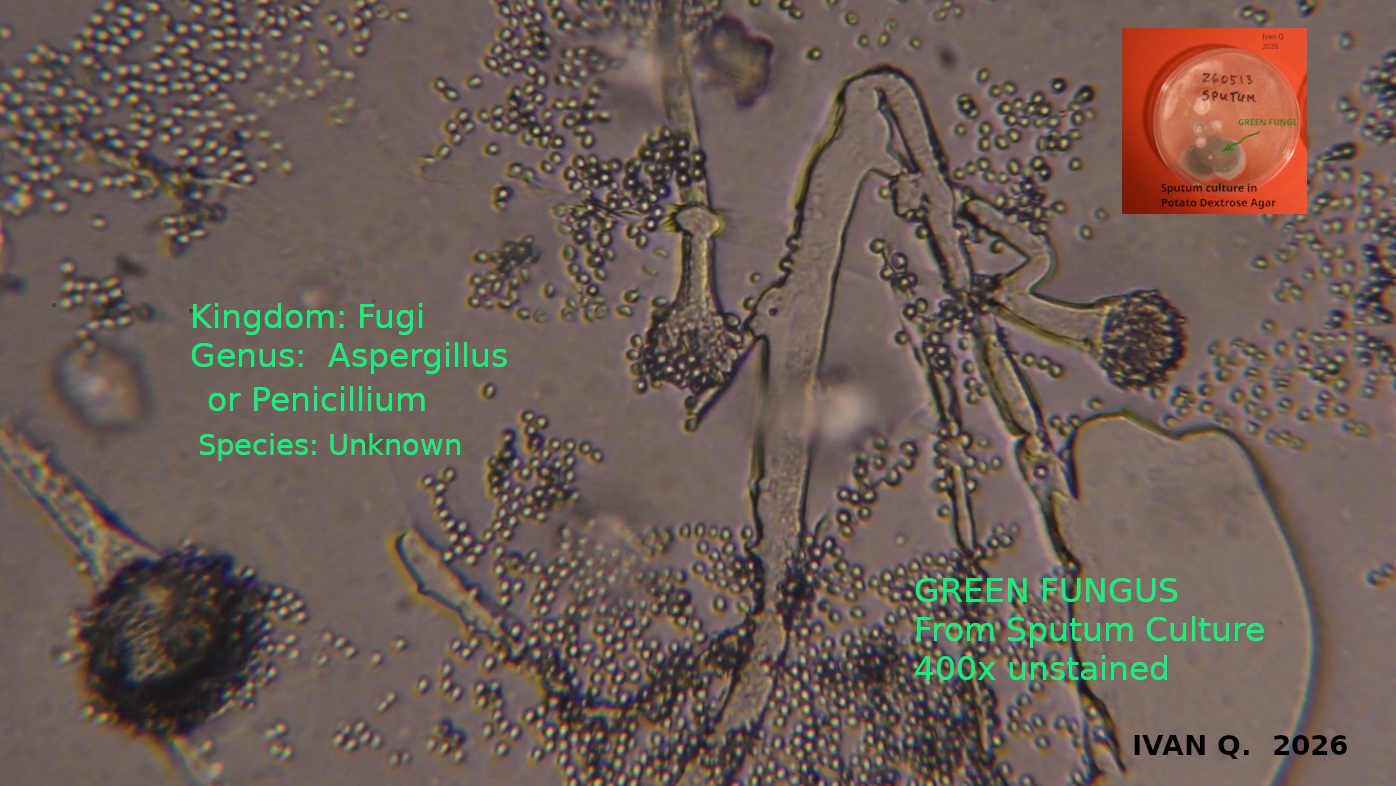
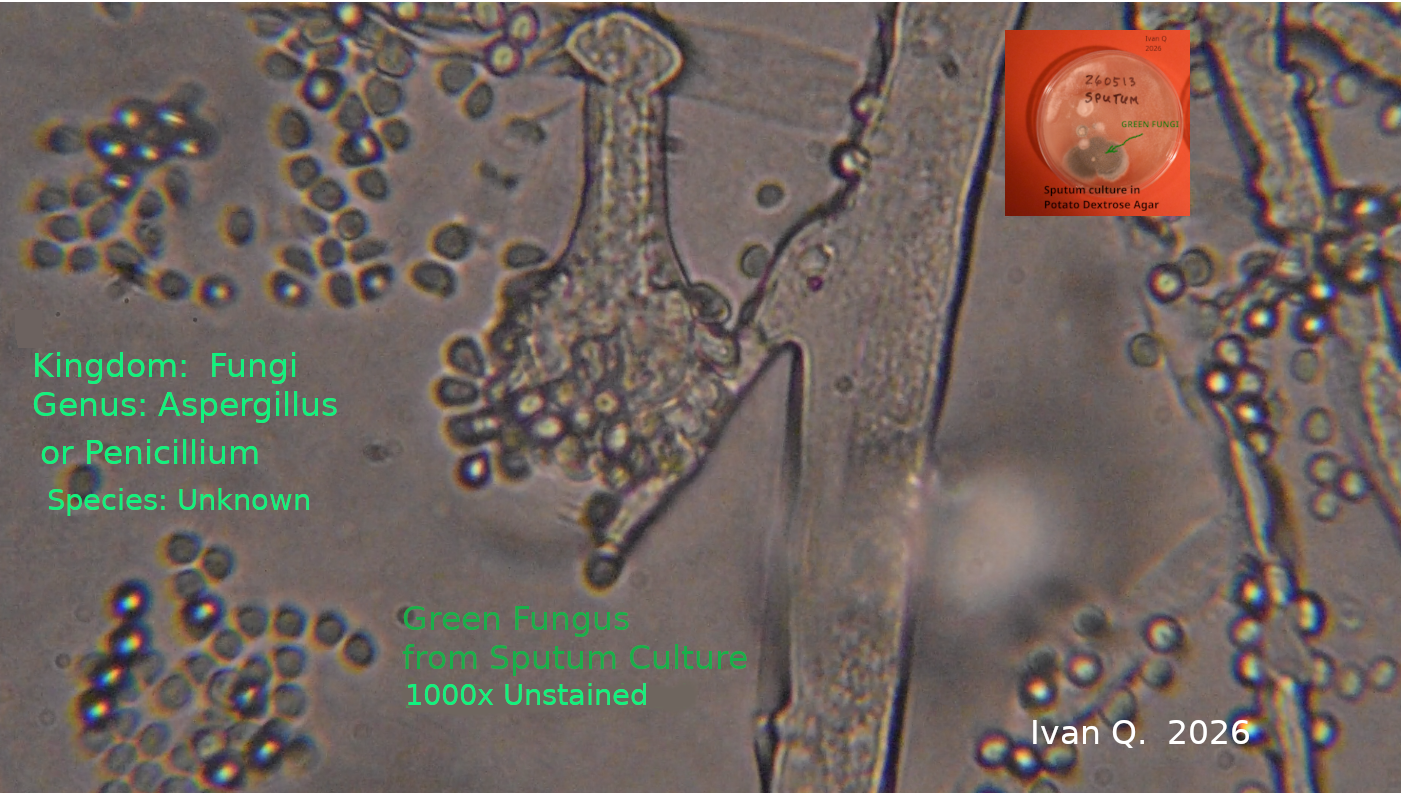
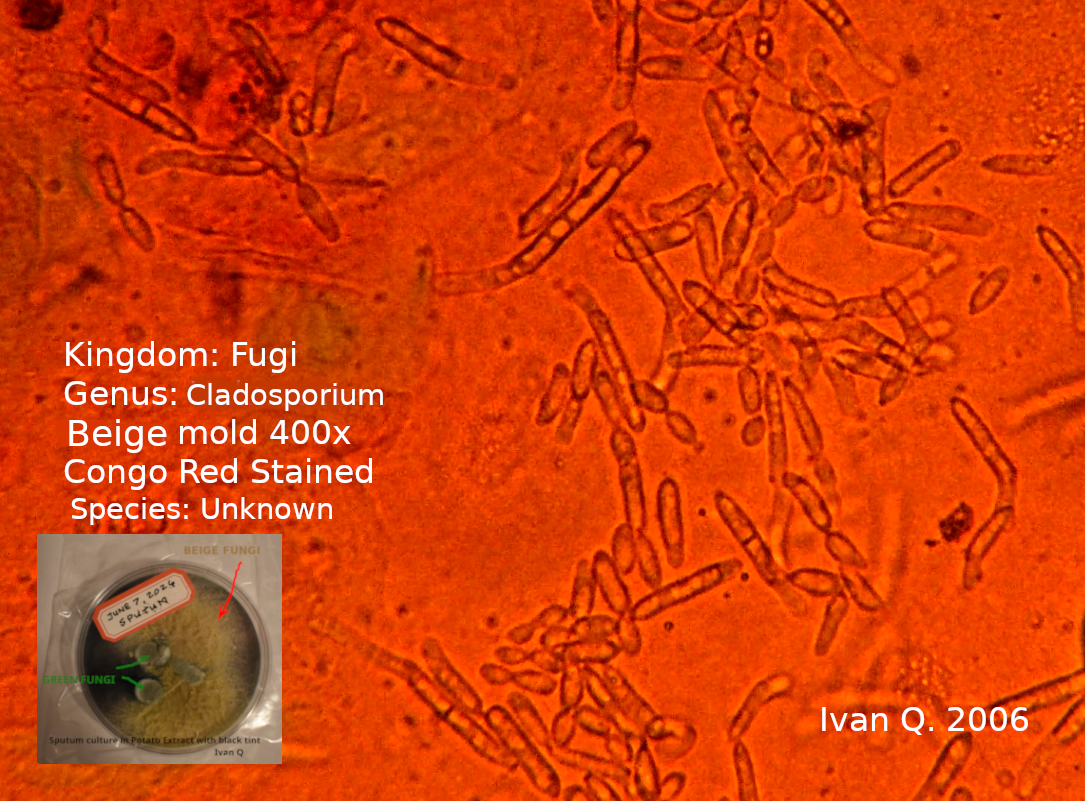
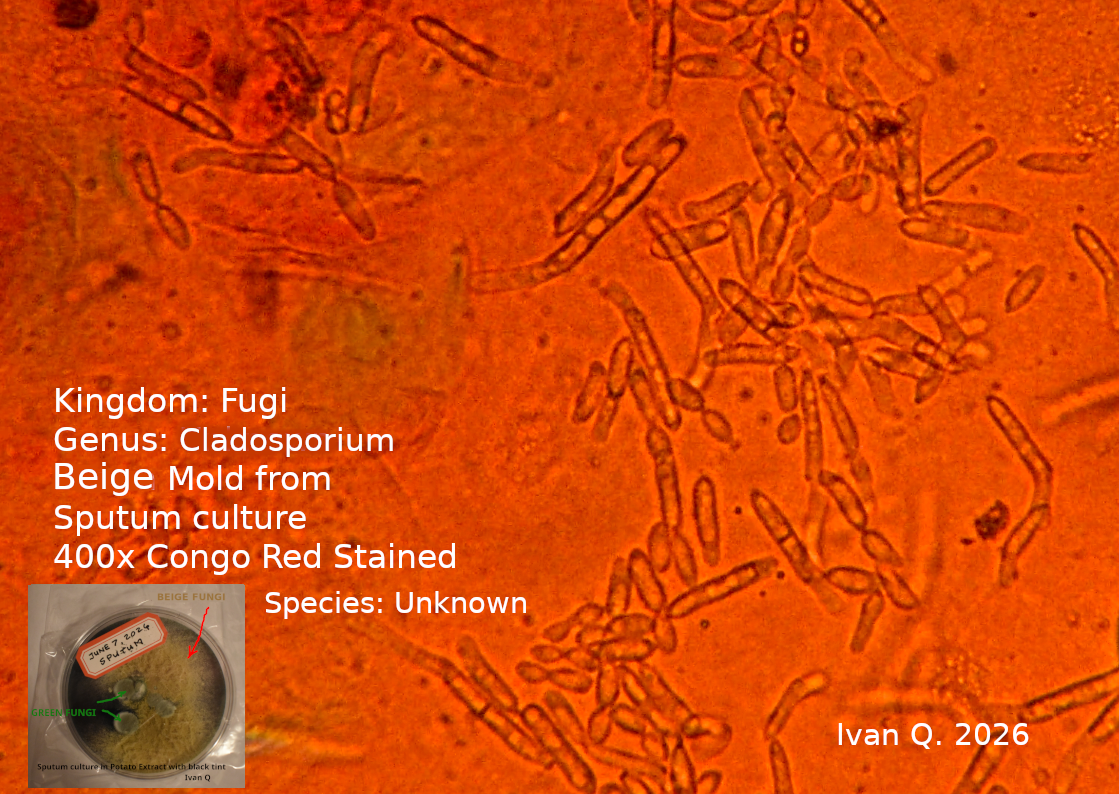
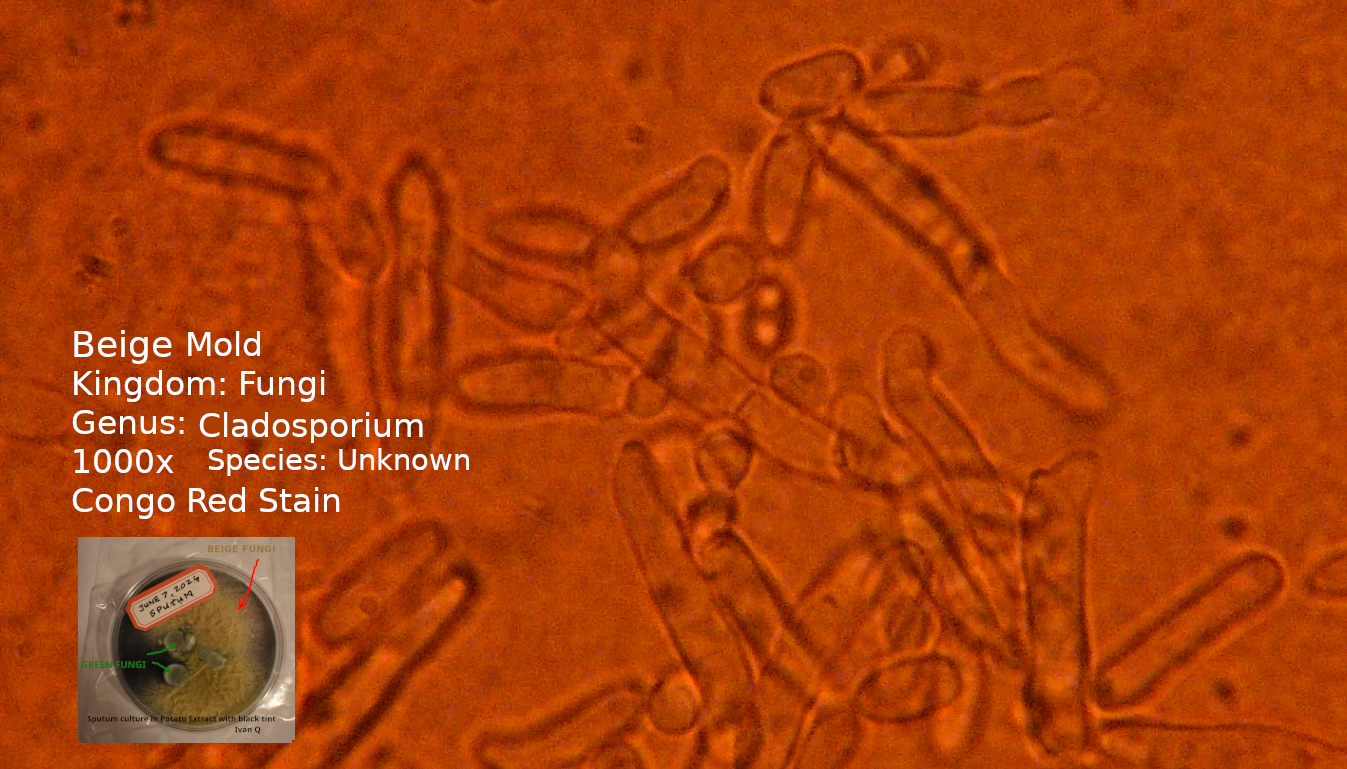
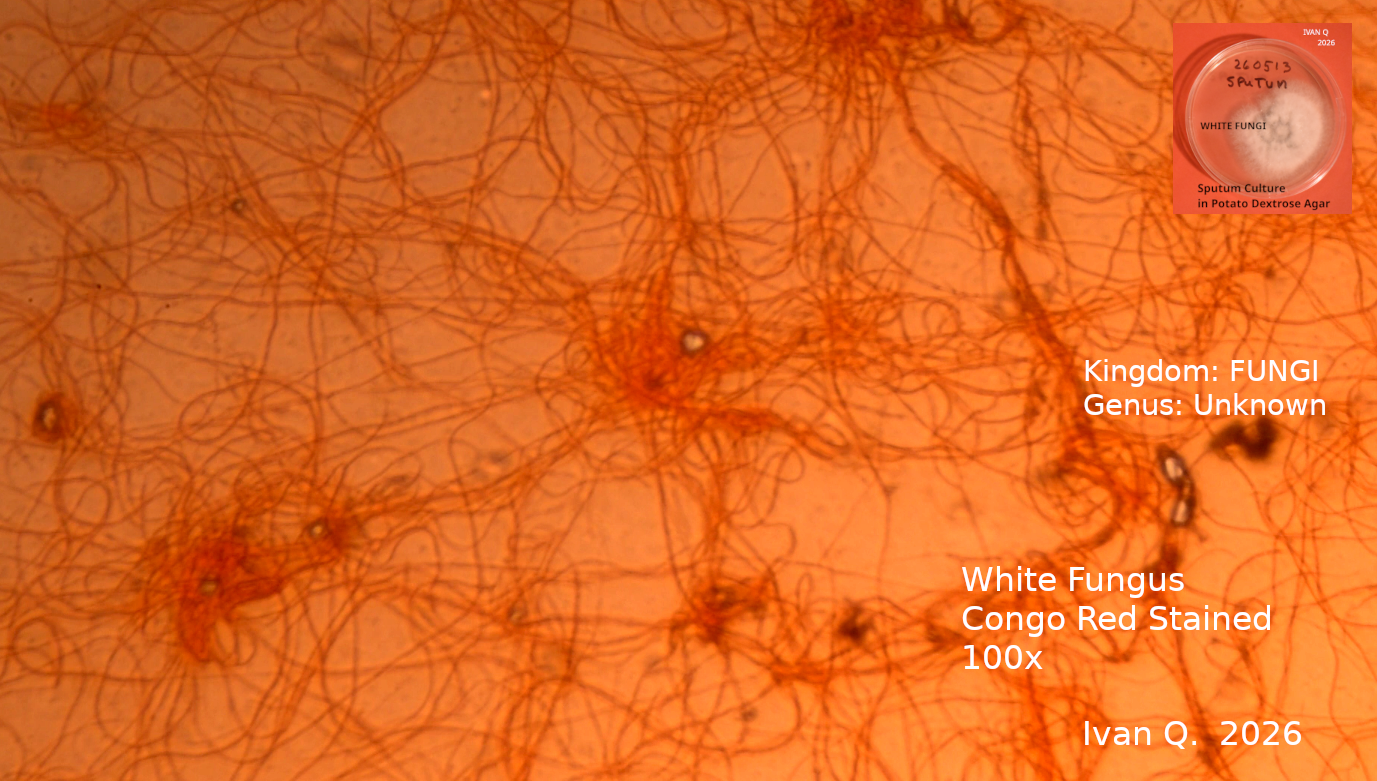
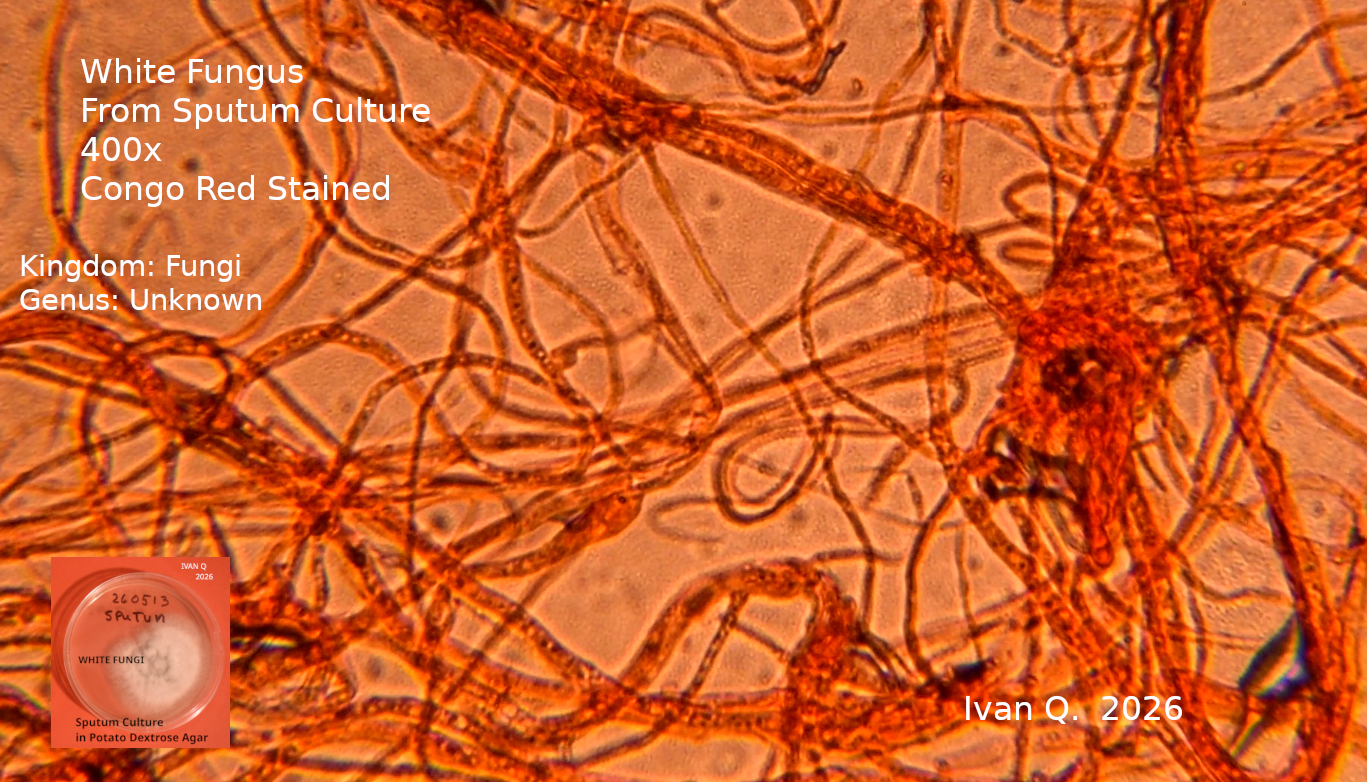
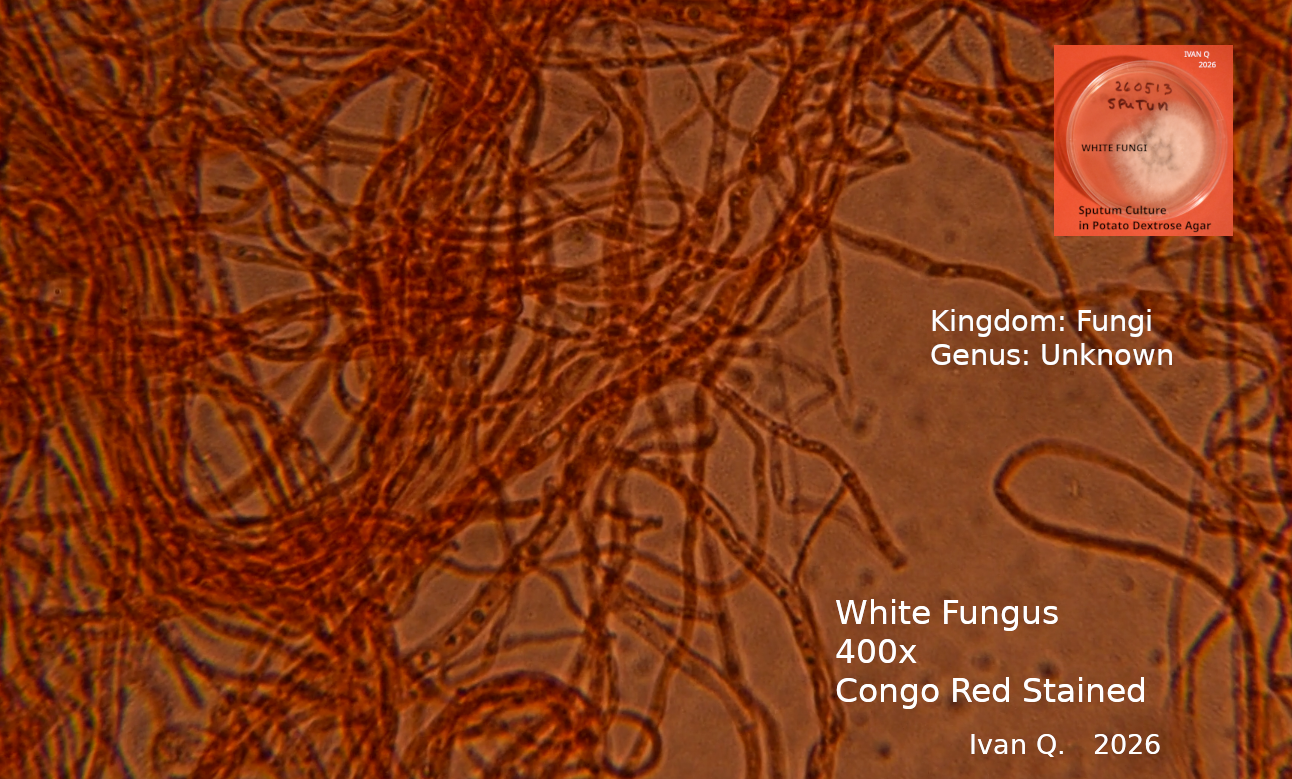
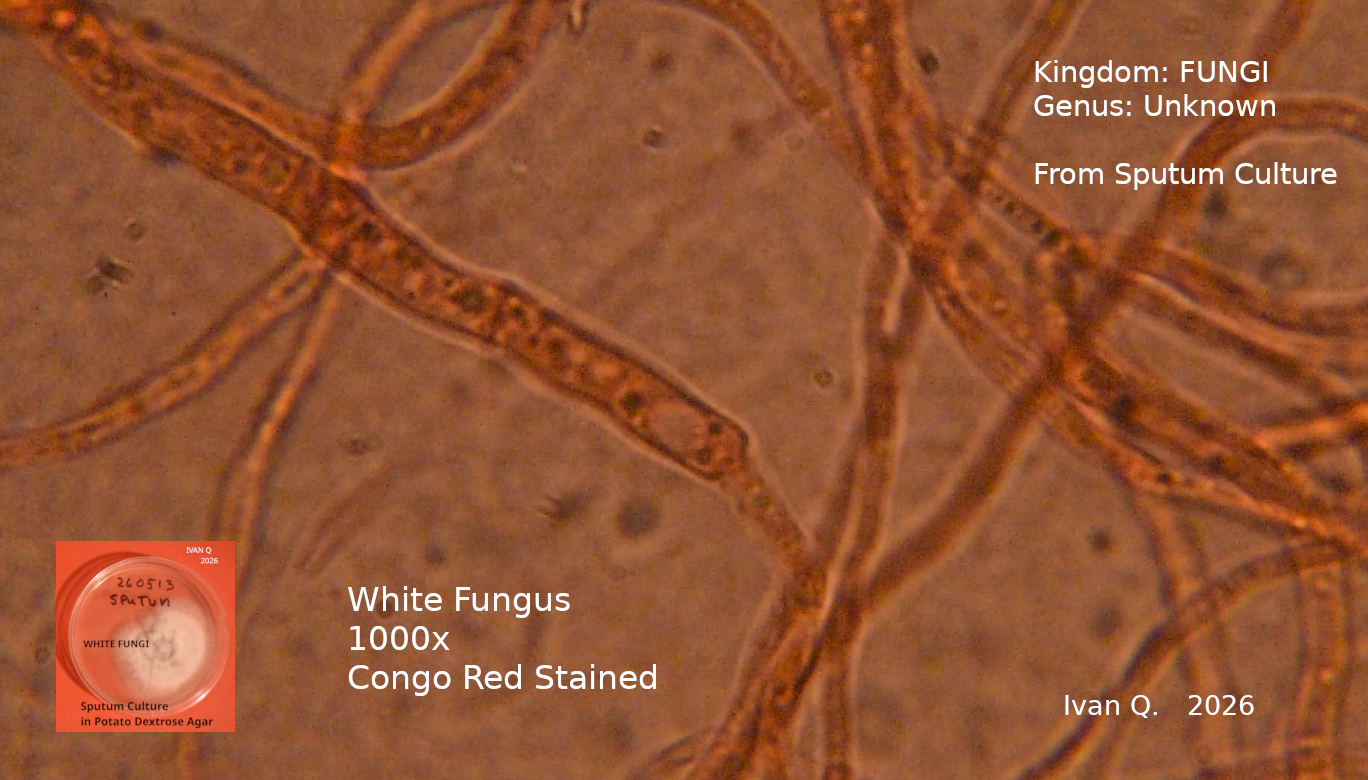
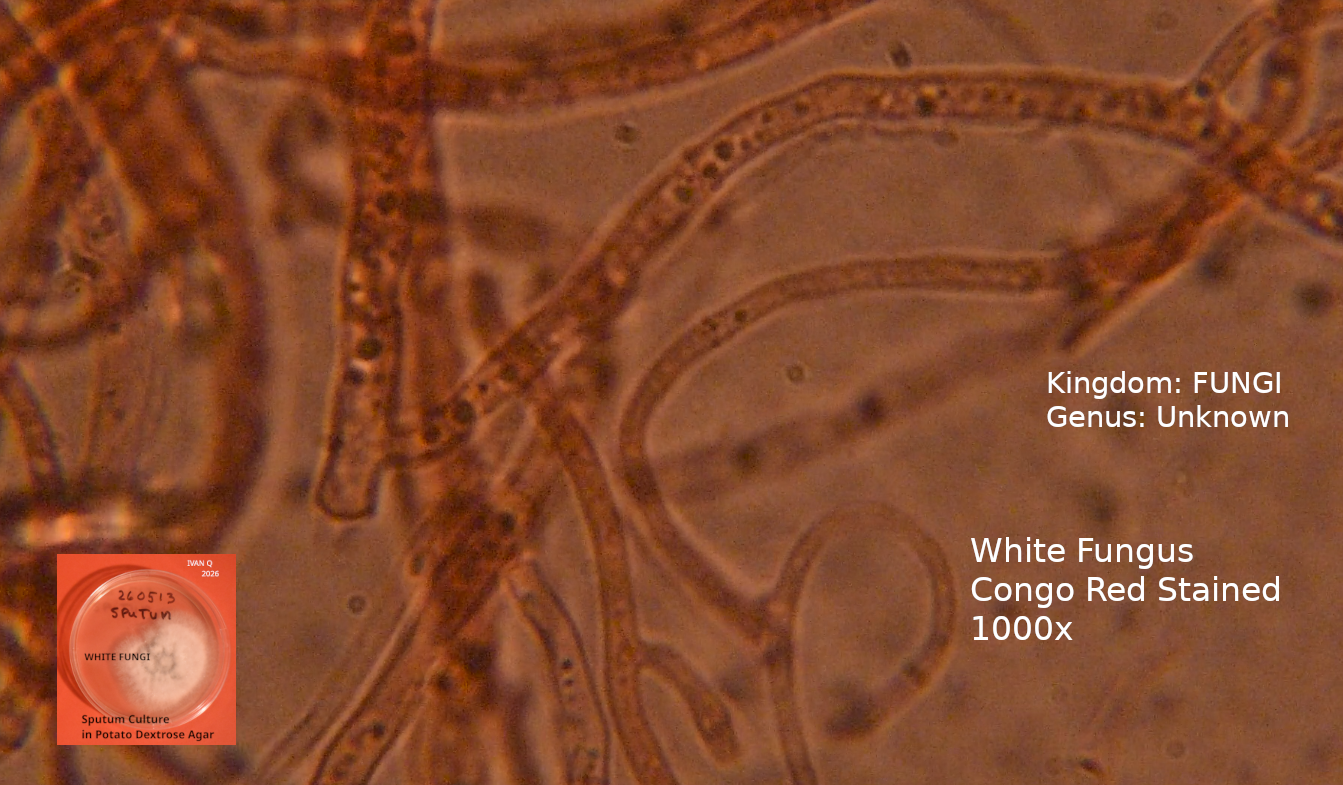
I am displaying here micrographs (digital photographs taken
through a microscope) of 3 types of molds (fungus) from my sputum
cultures. They each created colonies of different colors, one
white, one green, and one beige.
Clicking (selecting) any of the small linked-images bellow will
display a larger equivalent image.
GREEN MOLD (FUNGUS) MICROGRAPHS:


BEIGE MOLD (FUNGUS) MICROGRAPHS:


WHITE MOLD (FUNGUS) MICROGRAPHS:


And when I show these images to some physician
assistants or doctors, they don't believe that I am capable of
detecting mold in my sputum. Or they ask silly and ridiculous
questions such as "Are you certified?".
Do we really need a certification to spit some sputum on an agar
plate and wait 3 days for colonies to form?
Microscopist do not need any certification. We are, usually, very
intelligent individuals who are very curious about the microscopic
world and enjoy using our microscopes to take micrographs of our
blood, pathogens, molds, and other microscopic things, so that
those who do not have microscopes can also satisfy their curiosity
(if they have any about the microscopic world).
RETURN TO MANY
PORTALS