INTRODUCTION TO MICROSCOPY
By definition, Microscopy is research using microscopes.
However, I believe that it does not have to be just research.
We could be satisfying our curiosity, about the condition of our
blood, or searching for suspected pathogens in our blood, urine, or
sputum.
Therefore, a good microscopist should be familiar with the names of
some of the microscope parts,
or at least, we should know the difference between an objective
lense and an ocular lense.
I only use light microscopes, because electron microscopes and X-ray
microscopes are too expensive and not needed for the things I look
at.
Here is a good image of a light microscope with the names of their
parts:

I do not have the type of microscopes used to look at 3 dimensional
objects, because most of the time I look at samples of my blood, my
sputum, or some cultured pathogen or microbe.
In the World Wide Web (a.k.a Internet) you can find a lot of data
about microscopy.
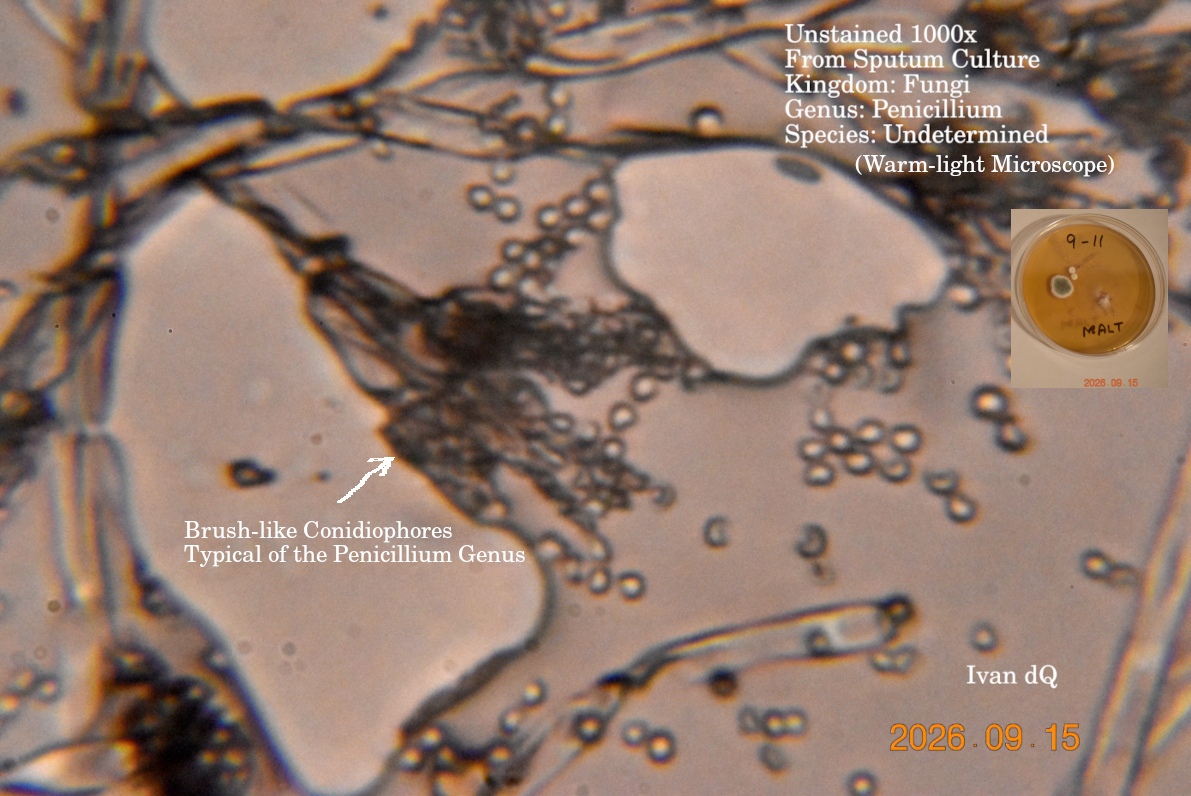
I use two types of light microscopes, one has a "warm" (yellowish)
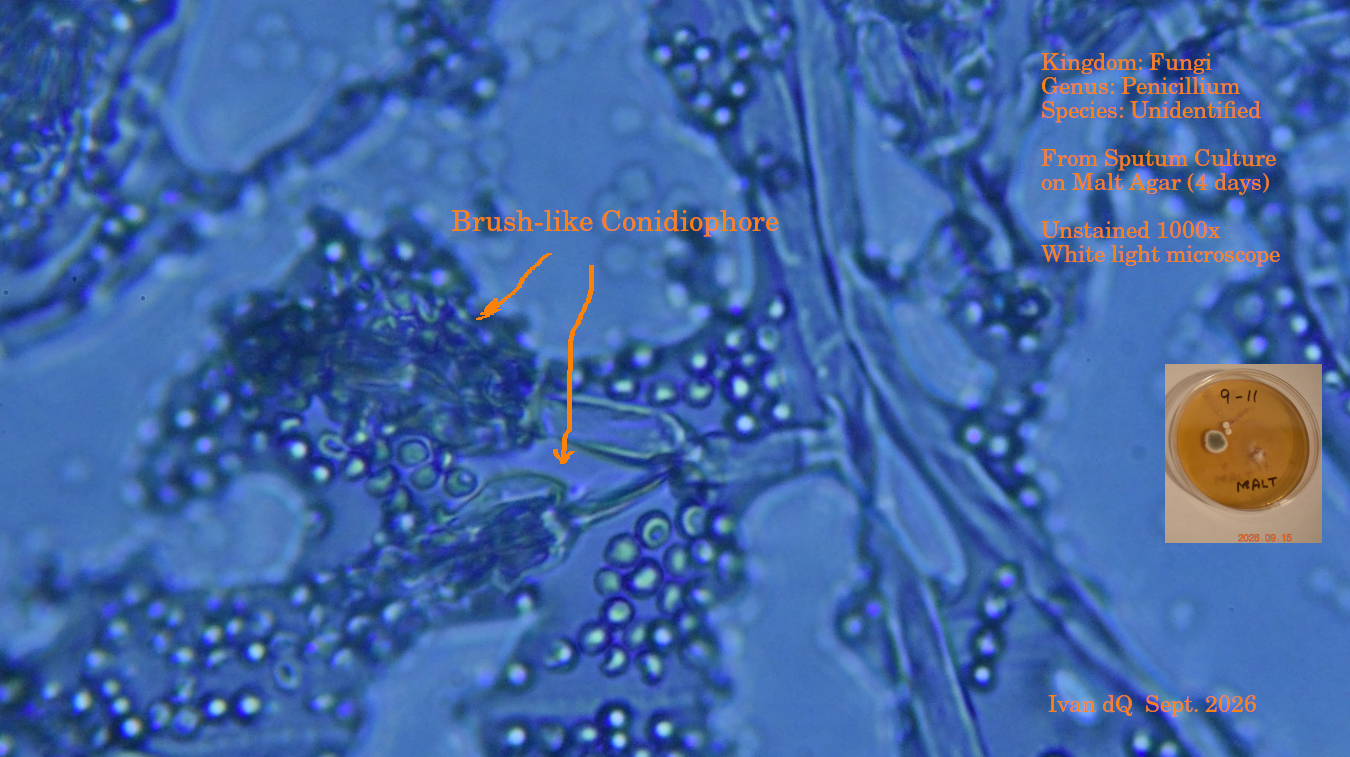
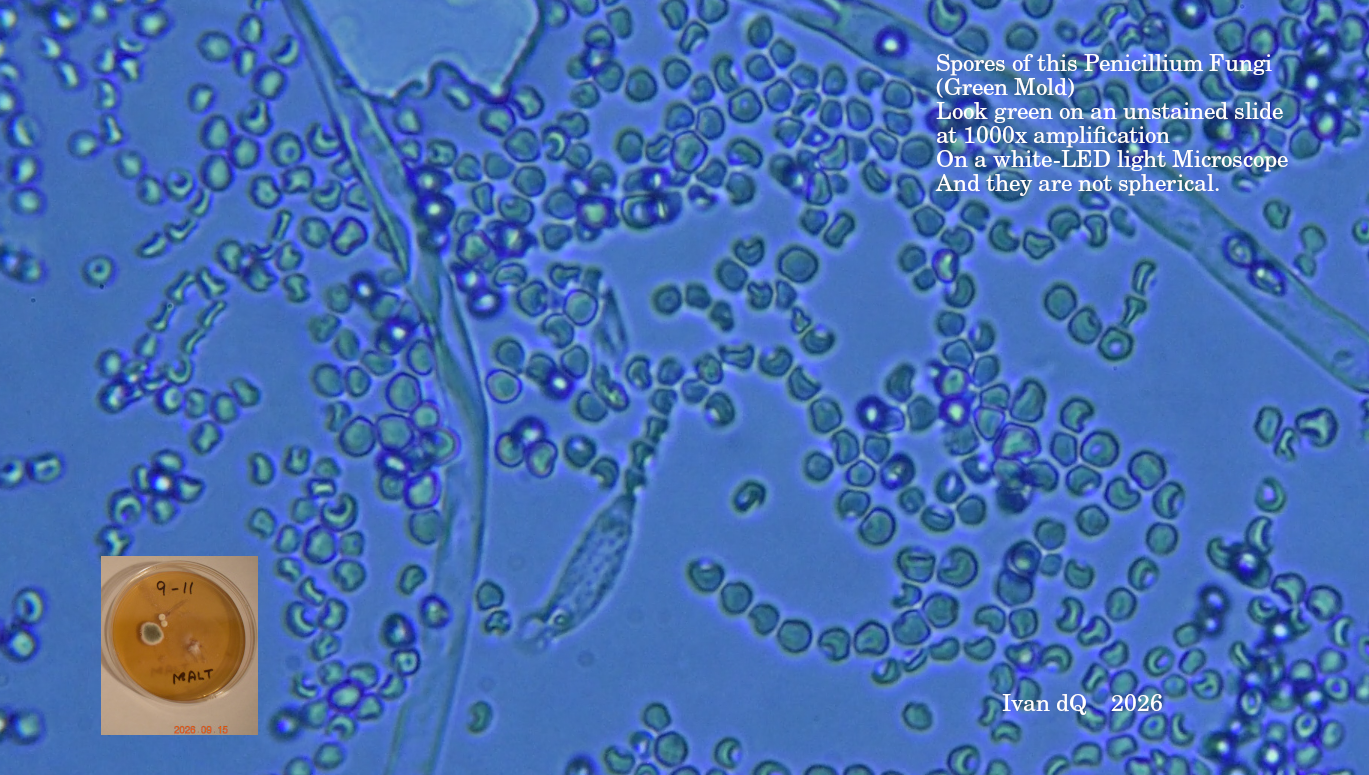
light source. The other has a "cool" (white) LED light source. The
white light, because of their high frequency light, makes the
digital Nikon I use, add some light blueish tint to micrographs of
unstained microscope slides.
I do not usually look through the ocular lenses. Instead, I look at
a 65" Ultrahigh Definition TV screen that I connect, via HTML cable,
to a digital Nikon camera. The Nikon has a 10x microscope lense
(same amplification as a standard microscope ocular lense), and the
lense can slide (fit) into one of the ports of the ocular lenses, or
to the camera port if it is a triport microscope. The camera has to
be set to "manual", otherwise it will complaint about not being able
to sense (communicate) with the lense.
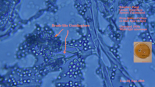
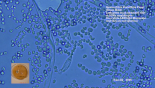
Bellow is an example of micrographs taken with the warm light
microscope and two micrographs taken with the white LED light
microscope. Select (click on) the smaller images to see a larger
version of the image.
In the World Wide Web (a.k.a Internet) you can find a lot of data
about microscopy.
There is a free, and very good, microscopy magazine from Austria
called "Microbe Hunter"
Here is a link to it:
https://www.microbehunter.com/
And you can download back issues from here:
https://www.microbehunter.com/category/magazines/
And Wikipedia has a good description of Microscopy:
https://en.wikipedia.org/wiki/Microscopy
RETURN TO
MICROSCOPY PORTAL